
Venues
Experience Los Angeles architecture firsthand. From sessions and keynotes to tours, attendees gain a deeper connection to the city’s built environment while learning, exploring, and connecting within spaces that bring the city’s architectural history to life.
Registration | Conference Sessions | Mid-Conference Keynote
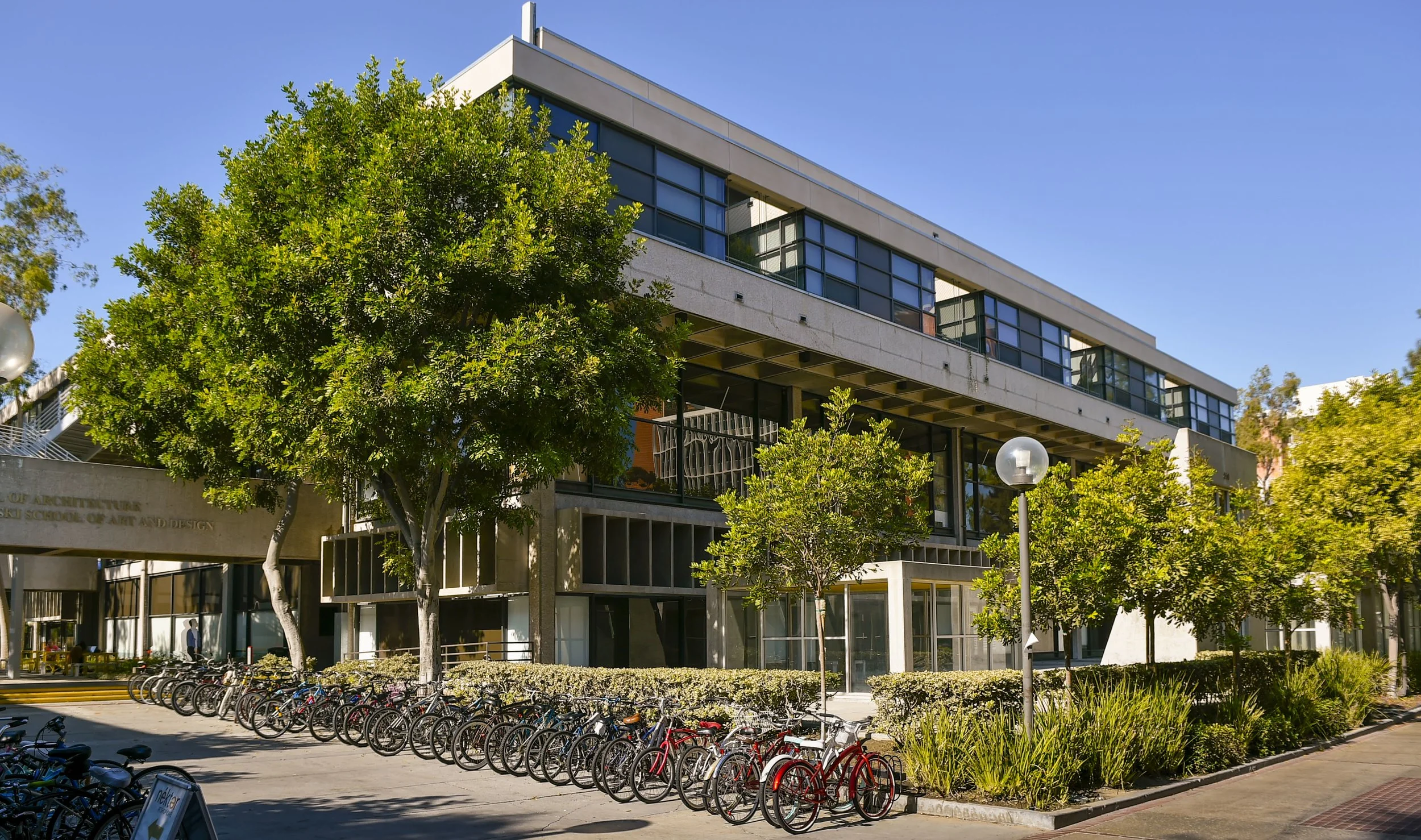
University of Southern California, School of Architecture
The 19th International Docomomo Conference will be hosted by the University of Southern California (USC) School of Architecture’s Master of Heritage Conservation Program at the University Park Campus, just south of Downtown Los Angeles. Originally founded in 1880, USC’s physical campus is a mix of major periods of development and growth, predominantly dating to the 1920s, 1960s, and 2000s. A 1966 master plan by eminent Los Angeles architect William Pereira resulted in a new campus plan based on the Garden City “cluster” model, and dozens of buildings designed by some of the city’s most important modern architects: Pereira himself, A. Quincy Jones, Edward Killingsworth, and Edward Durell Stone.
The School of Architecture’s Master of Heritage Conservation program was founded at the turn of the twenty-first century and offers a graduate degree in heritage conservation, as well as dual degrees with landscape architecture, building science, architecture, and urban planning. The Heritage Conservation Program prepares students and strengthens communities using existing places and the stories they tell. Offering the only master’s degree of its kind on the West Coast of the US, the program includes training on cultural and intangible heritage, under-recognized communities, and modernism of the recent past.
Opening Keynote | Opening Reception
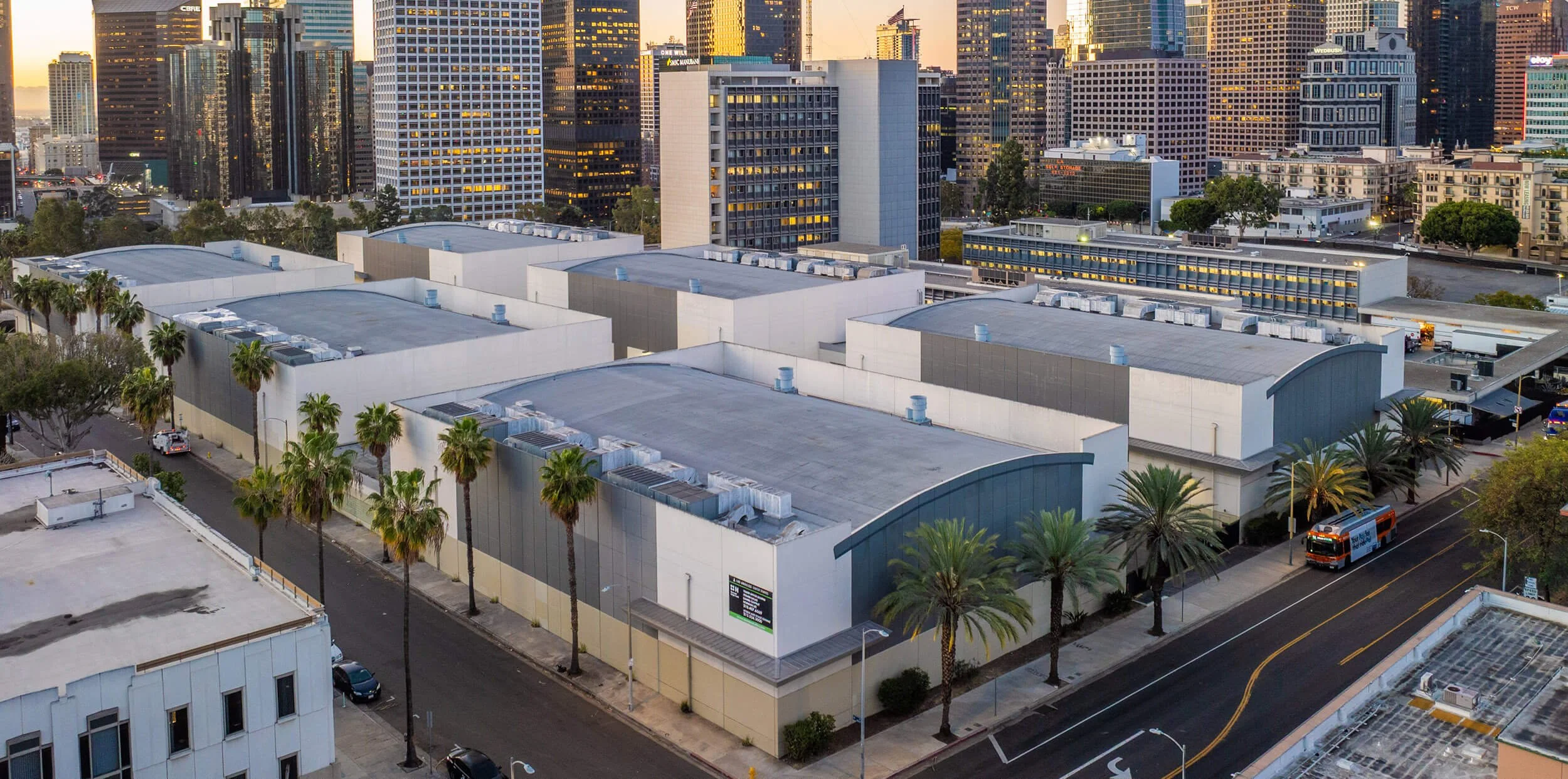
LA Center Studios
This working film studio – and successful adaptive reuse project – was originally the headquarters of the Union Oil Company of California. The main building was designed by architects William Pereira and Charles Luckman and opened in 1958. Forty-years later, when threatened with demolition, Union Oil Center was preserved and transformed into a vertical backlot alongside the addition of six sound stages, creating Los Angeles Center Studios.
Ticketed Event
Bonaventure Hotel
With its soaring mirrored glass cylinders, futuristic atriums, and dizzying interior escalators, John Portman’s Late Modern Bonaventure Hotel is as much an experience as a setting, and serves as a fitting backdrop to relax, connect, and mingle with your colleagues from around the world. Enjoy the rotating Bonavista Lounge on the hotel’s 35th floor on Wednesday evening at Happy Hour sponsored by US Modernist.

Bonaventure Hotel interior, photograph by Richard Anderson
Closing Plenary | Closing Reception | Exhibitions
The Getty Center
The closing plenary session and reception will be held at the Getty Center. Set on a hilltop in the Santa Monica Mountains, the Getty Center offers panoramic views of Los Angeles and the Pacific Ocean. It is the home of the J. Paul Getty Trust; the Getty Museum, one of LA’s premier art museums; the Getty Research Institute, one of the largest art and architecture libraries and archives in the US; and the Getty Conservation Institute. Designed by architect Richard Meier and opened to the public in 1997, the Getty Center was conceived as a cultural acropolis. Meier employed his signature vocabulary of neo-Corbusian shapes and forms to create a dynamic composition of buildings and open spaces rendered in Italian travertine and painted metal panels. The landscape of the 700-acre site (238 hectares) was designed by the Olin Partnership with a sophisticated palette of California and Mediterranean trees, shrubs, and groundcover that also contains a network of water features woven through the site which reinforce the building organization and massing, enhance and define its open spaces, and soften its stark off-white walls and pavements. The complex’s Central Garden was designed by American installation artist Robert Irwin.
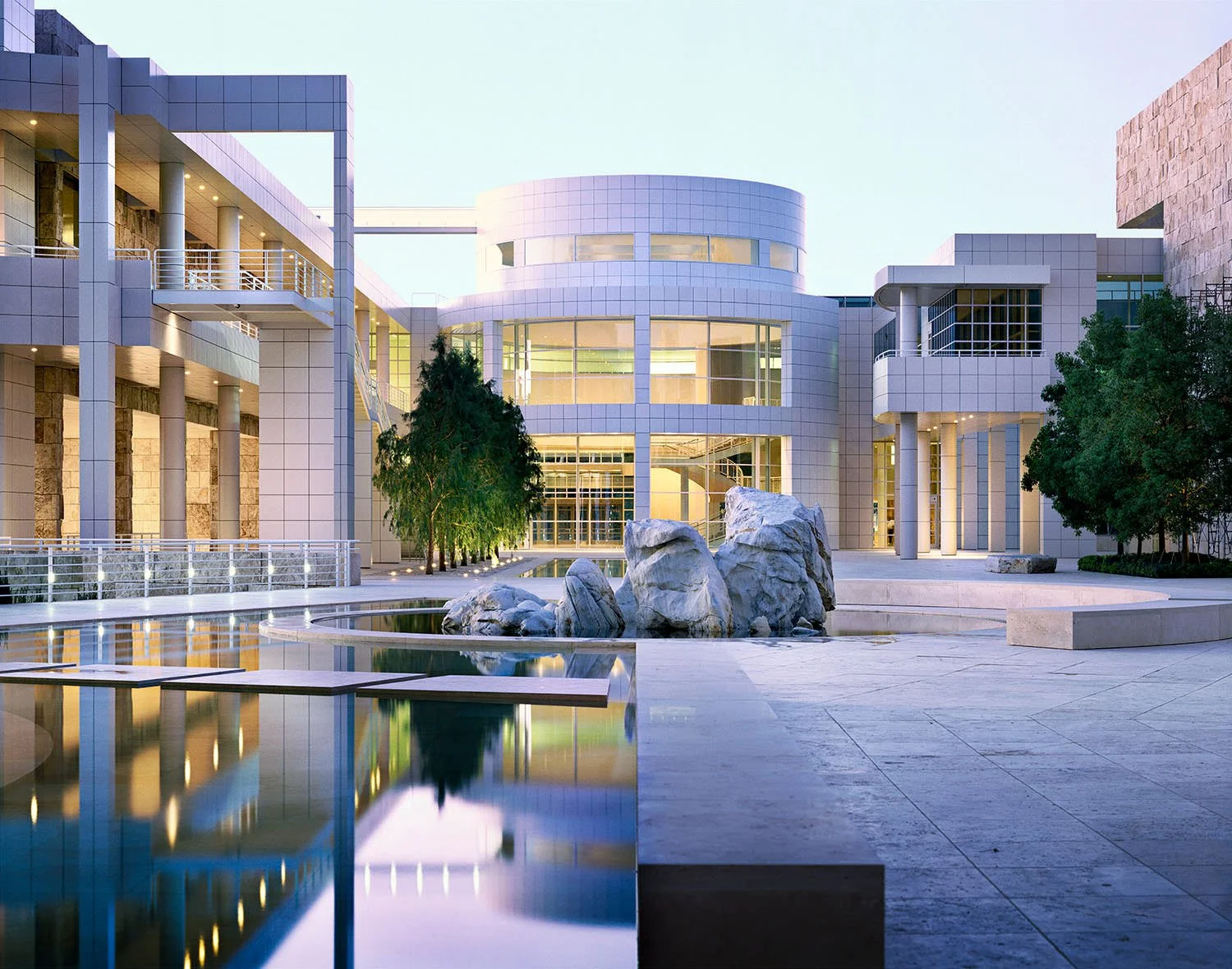
Getty Center, Richard Meier, 1989-1997; photograph by Studio Practice